

This website uses cookies so that we can provide you with the best user experience possible. Cookie information is stored in your browser and performs functions such as recognising you when you return to our website and helping our team to understand which sections of the website you find most interesting and useful.
Detained at the French-Italian Border for 24 hours
On the morning of the 2nd of December we met 12 people on the move over 3.5 hours at the border of France and Italy, Ponte Sant-Louis, where people wait for the bus to Ventimiglia which comes once every few hours. Six people were released from the police station at around 10.30am. Three of the men we met were from Morocco and they were travelling with more people who were still detained. They got the bus to Ventimiglia at 11.55am and we said we would tell them where they’d gone if we saw them. Shortly after 12pm their friends arrived and three out of four of the men were highly distressed and crying. We rang a translator to communicate better with the group and see if they are OK and tell them where their friends had gone.
Menton PAF post; the police station where the person was detained
A common thread among those who spoke neither French nor Italian leaving the border station is that they do not know where they are. These men didn’t know if they were in France or Italy or where the nearest towns were. They are pointed to walk up the hill towards Ventimiglia, but not told it is an 8km walk, not explained directly where the bus stop is, or what times it goes at. The Moroccan group had been taken off of a flix bus at 13:30 the previous day and kept at the police station for almost 24 hours. The longest they should be kept is 4 hours, and even if the police station “closes” at 5pm, they should have been released the previous day. They were not given food and they were told they could drink water from the tap, but were not given cups so had to use their hands. They had access to toilets but said they were filthy and the mattresses for sleeping were thin, dirty and uncomfortable and not enough for everyone.
Of the first group we met, two had recently turned 18 according to their pushback papers, which we weren’t sure if it was true or they had not wanted to be separated from their group as they seemed significantly younger than 18. We gave them contact numbers and told them they could ask an organisation for help in Ventimiglia as they were young they could probably get accommodation there but they were in contact with an uncle in Spain who would help them. We had a power bank and helped them charge their phones before they got the bus, as they had not been allowed to charge them in the cells.
Of the first group we met, two had recently turned 18 according to their pushback papers, which we weren’t sure if it was true or they had not wanted to be separated from their group as they seemed significantly younger than 18. We gave them contact numbers and told them they could ask an organisation for help in Ventimiglia as they were young they could probably get accommodation there but they were in contact with an uncle in Spain who would help them. We had a power bank and helped them charge their phones before they got the bus, as they had not been allowed to charge them in the cells.
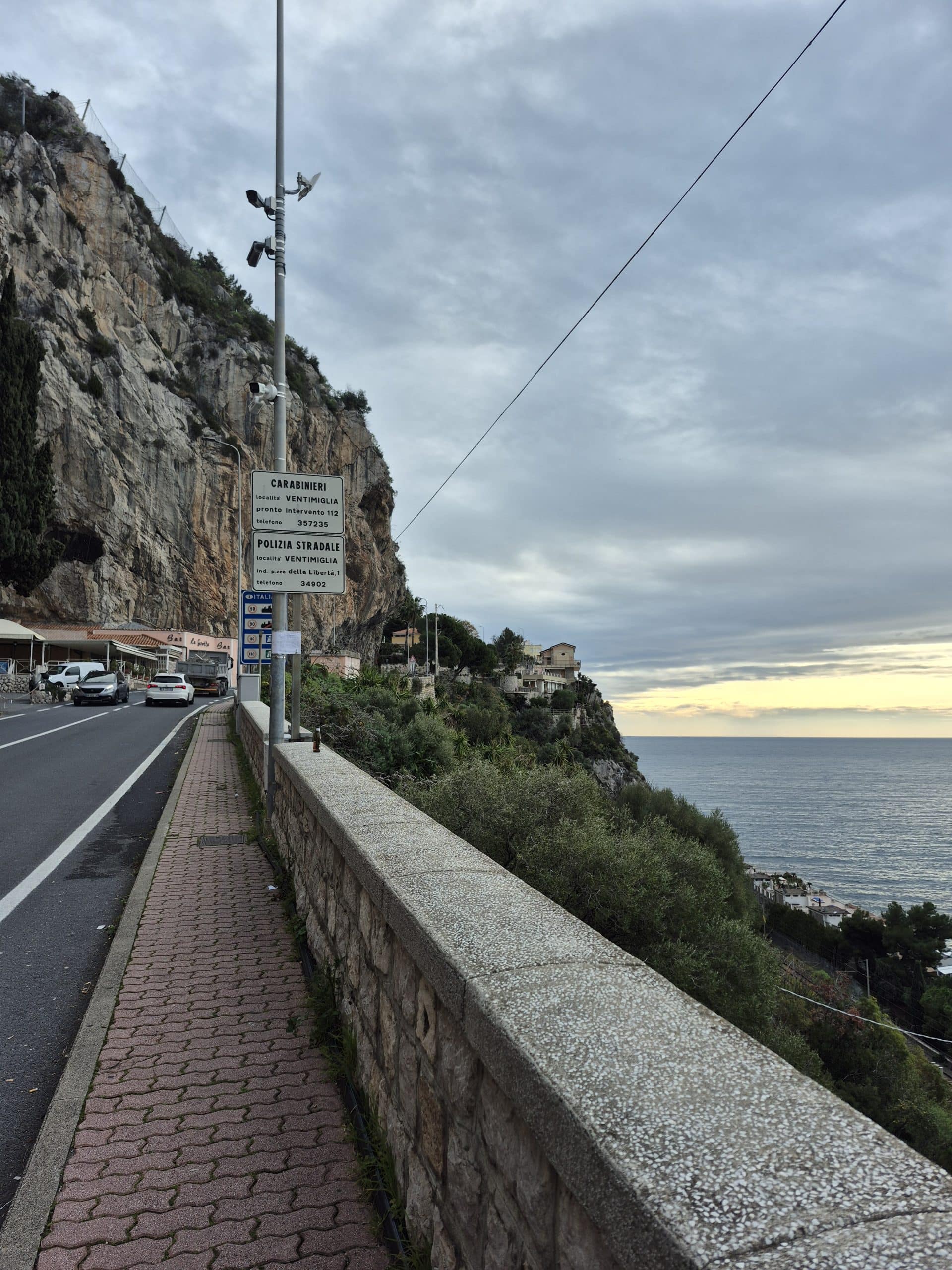
The not-signposted bus stop on the Italian side of the border where we meet people who have been pushed back
When the second group arrived, just after the first bus had gone (a repeated timing tactic of inconveniencing people that is used when releasing them) we used a translator to speak with one of the young men in Arabic. He explained they had not eaten or had clean water. They were too stressed to eat much but we gave them bananas and tea and bottles of water. They had slept very badly and were exhausted. They were trying to get the bus to Spain to join their family there but had been taken off the bus in Menton. He told us that meeting us was the first time they had been treated like humans through this experience.
Everyone in the French police station gets fingerprinted and recently they have also been separating people from their phones, without warrants, to allegedly search them. On the same day we met a man from Pakistan who had been separated from his phone and when it was returned to him he couldn’t access it because the police had seemingly blocked it from too many attempts at accessing the code. Allegedly the French police are using a form of Israeli phone hacking technology that can bypass security codes to access people’s phones, but can sometimes leave them blocked from use afterwards. We have met others that refuse to be separated from their phones and then are reportedly kept awake and repeatedly pressured to hand it over so it can be searched, without permission.
Everyone in the French police station gets fingerprinted and recently they have also been separating people from their phones, without warrants, to allegedly search them. On the same day we met a man from Pakistan who had been separated from his phone and when it was returned to him he couldn’t access it because the police had seemingly blocked it from too many attempts at accessing the code. Allegedly the French police are using a form of Israeli phone hacking technology that can bypass security codes to access people’s phones, but can sometimes leave them blocked from use afterwards. We have met others that refuse to be separated from their phones and then are reportedly kept awake and repeatedly pressured to hand it over so it can be searched, without permission.
The not-signposted bus stop on the Italian side of the border where we meet people who have been pushed back
legal analysis
The respondent’s account of being detained without legal basis or access to due process constitutes arbitrary detention, which is prohibited under international and regional human rights law (Art. 9 UDHR; Art. 9.1 ICCPR; Art. 5.1 ECHR; Art. 6 EUCFR). The automatic or punitive detention of asylum seekers or persons on the move, particularly without access to legal remedies or information on the reasons for detention, violates these principles. Refusing to process or receive asylum claims, as well as interference or obstruction in individuals' asylum processes is a violation of the Right to Asylum as established in the 1951 Refugee Convention, the UN Declaration on Human Rights (Article 14), and the EU Charter of Fundamental Rights (Article 18).

overview
8 people ,
from Morocco,
aged 18 (or younger) - 40.