

This website uses cookies so that we can provide you with the best user experience possible. Cookie information is stored in your browser and performs functions such as recognising you when you return to our website and helping our team to understand which sections of the website you find most interesting and useful.
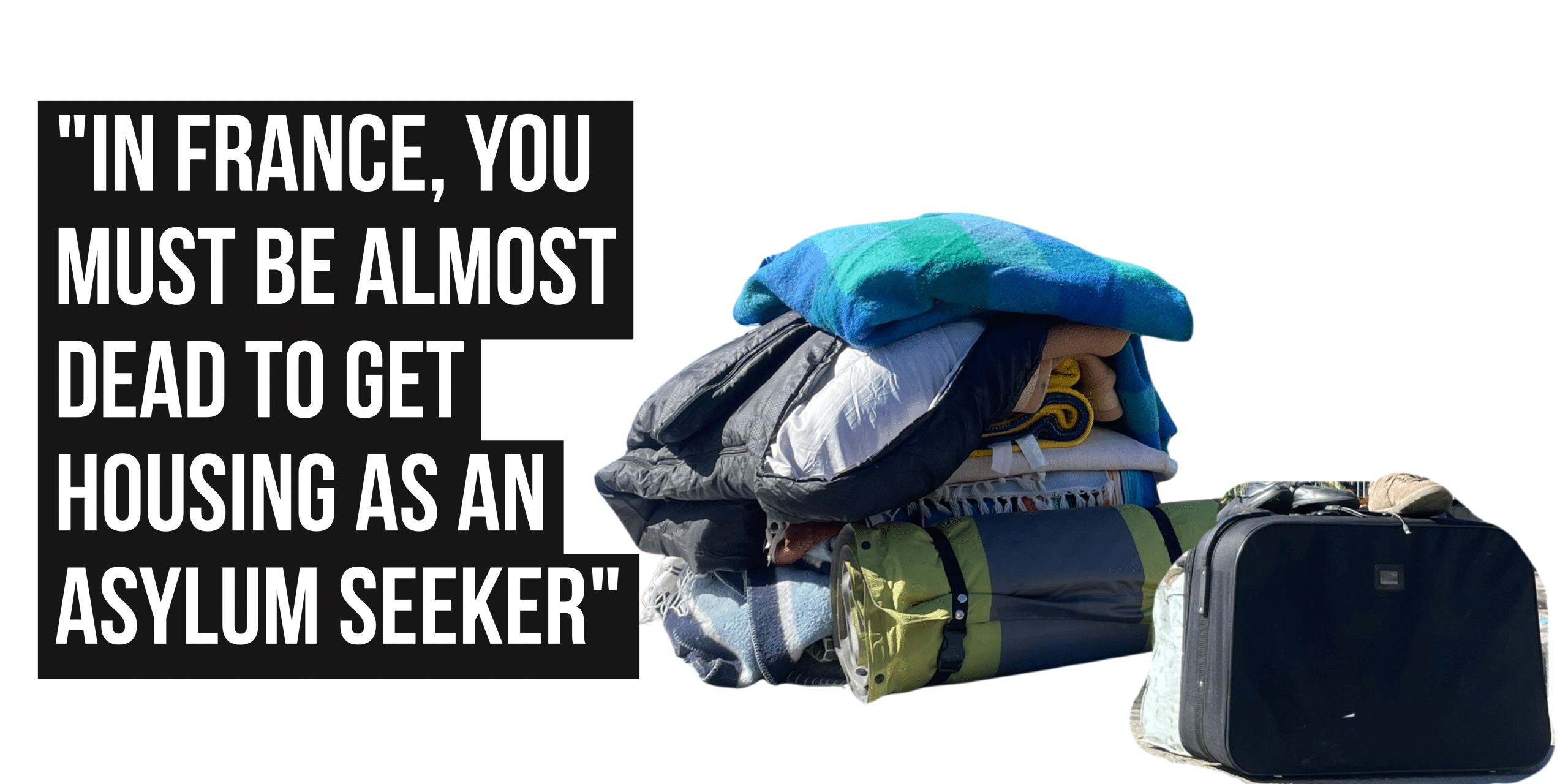
“In France, you must be almost dead to get housing as an asylum seeker”
Leyla escaped from her family and the conservative norms of Turkey five years ago. As a feminist activist, she attended protests, wrote manifestos, and spoke out against patriarchy. Her religious relatives rejected her, and professors at Istanbul University blocked her from graduating, failing exams she had passed. “They did the same to other feminist women,” she says. Seeking safety, Leyla fled to Montenegro, where she met her future husband, who ran a social media agency. When he published an article critical of President Erdoğan, Montenegrin authorities revoked his residence permit, froze bank accounts, and issued an expulsion order giving him eight days to leave. The couple appealed in court but were rejected. Fearing deportation to Turkey, they fled to Norway on a French tourist visa. The Turkish Ministry of Foreign Affairs had requested their extradition – proof they presented when applying for asylum.
After six months in a refugee camp, the French government, under the Dublin Regulation, agreed to take over their case and paid for their transfer to France.They expected safety, but when they arrived in Nice, French police greeted them with mockery. “They said, ‘What did you expect, a five-star hotel? Welcome to France,’” Leyla recalls. The police refused to help them find shelter while waiting for SPADA – the Structure de Premier Accueil des Demandeurs d’Asile – to open.SPADA is responsible for providing accommodation and food to asylum seekers. Yet for two months, Leyla and her husband were turned away daily and told to sleep outside. If they missed a day, SPADA would report them to the police as having “escaped,” which would annul their asylum claim. Staff told them there was no space and that they were “young and healthy” enough to survive on the street – even though her husband suffered from eczema and depression. They were never given written notice of rejection.When Leyla tried to defend their rights, an employee falsely accused her of screaming and threatened to call the police. Appeals to Caritas, the Red Cross, and other NGOs brought no help. “They were often rude,” she says, “and only gave us expired food.”For weeks, they slept on the beach on sunbeds. A Bulgarian woman they met on the beach introduced them to a Turkish refugee who lent them his car to sleep in and let them shower and eat in his shared apartment until his landlord forbade it. Azerbaijani and Turkish political refugees they had met in Norway later collected money for them, but French banks still refused to open an account, despite valid documents.Administrative violence continued. During her first asylum interview, Leyla waited eight hours without water. The interpreter shortened her statements and added his own opinions. Prefecture officials then rejected their request for accommodation and their appeal. Leyla says, “In France, you must be almost dead to get housing as an asylum seeker.”Without work permits, her husband worked unofficially and was underpaid. For their second interview, scheduled in Paris, the authorities failed to transfer funds in time for travel. After interviewing Leyla, the officer refused to interview her husband, saying he “didn’t have time,” and postponed it for four months – forcing them to remain homeless. Back in Nice, Leyla’s health worsened. SPADA didn’t provide her health insurance for three months. She began vomiting daily and missed her period for two months. A pregnancy test was positive, but doctors refused to treat her without insurance.
Leyla couldn’t bear such life anymore, so they decided to flee to Italy. By the time she reached Trieste, the pregnancy test turned negative. In Italy, doctors finally provided the medical and psychological care Leyla needed. An NGO offered them a shared apartment, language classes, and professional training. Today, Leyla and her husband volunteer with other refugees in Trieste – she hopes to work as a data analyst, and he plans to study law to become a human rights and immigration lawyer.

overview
2 people ,
from Turkey,
aged Around 30 years old.