

This website uses cookies so that we can provide you with the best user experience possible. Cookie information is stored in your browser and performs functions such as recognising you when you return to our website and helping our team to understand which sections of the website you find most interesting and useful.
On the path, I saw the bodies of many people – only bones and skulls remained. That sight hurt me deeply in my heart.
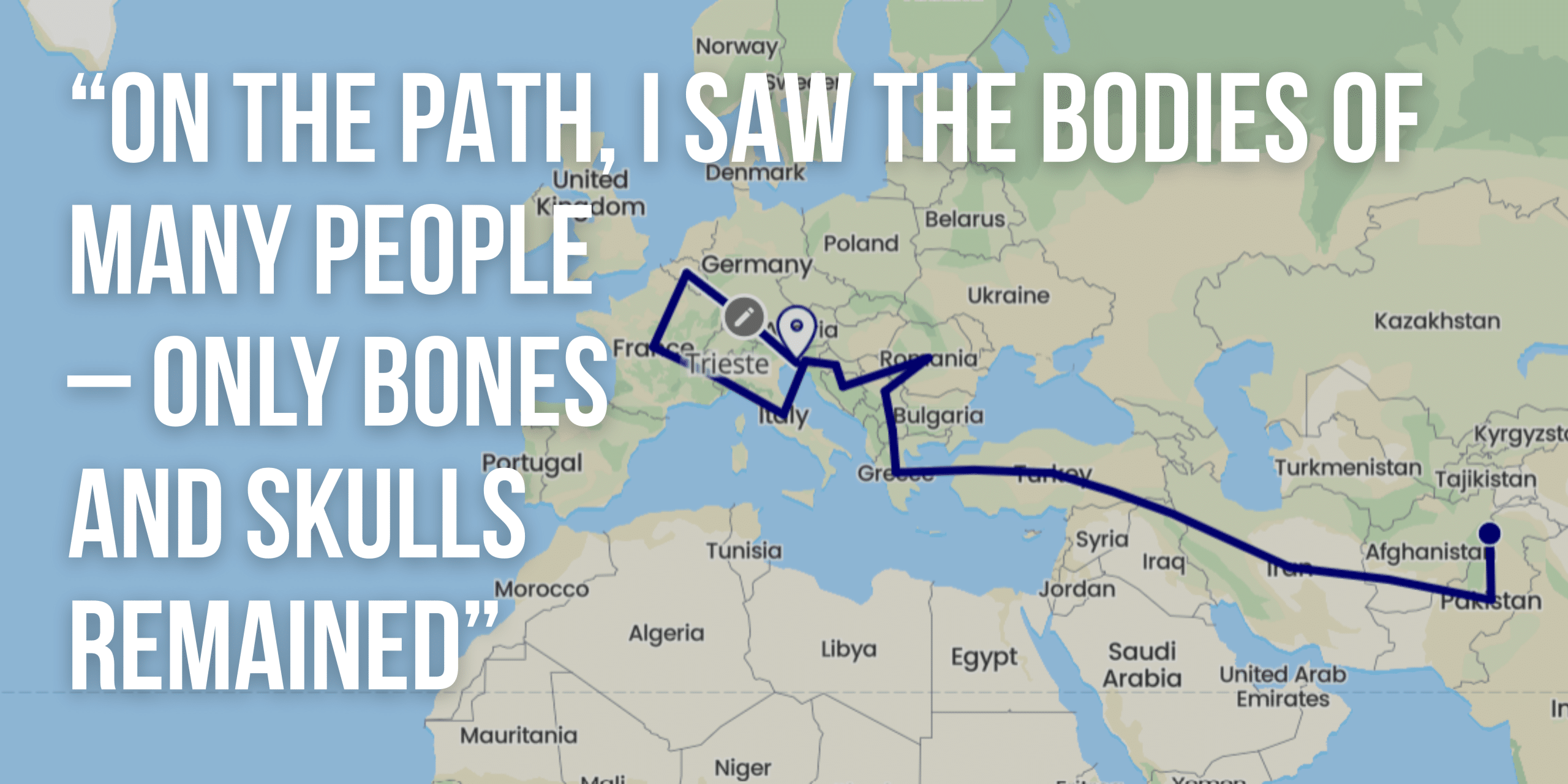
The main respondent is a 17-year-old young man living in Trieste, Italy. He does not remember exactly when he left his hometown in the northeastern Afghan province of Kunar, but he believes he was around 12 or 13 years old when his journey began in 2021.
His first attempt to leave Afghanistan took him to Pakistan, where he was arrested by the police, held for several days, and then sent back. On his second attempt, he managed to cross into Pakistan and continue onward to Iran. There, his journey quickly turned dangerous. When the car he was traveling in failed to stop at a checkpoint, Iranian police opened fire. He remembers hearing the gunshots. He also recalls going hungry in Iran, surviving on only a little food during five or six days.
From Iran, The respondent tried to cross into Turkey. He was immediately arrested by Turkish police, imprisoned for several days, and deported back to Iran. “When we arrived in Iran, thieves captured us,” he recalls. “They beat me badly and told me to call my family for money. If my family didn’t pay, thieves threatened to kill me, along with about 14 or 15 other people they had taken. My father sent 10,000 dollars to their bank account. Only then did they let me go.”
The respondent remembers other horrific moments. He says that Iranian police shot refugees at the border with Turkey. The wounded and dead were then taken to Turkish hospitals, but instead of being treated, nurses used their bodies to practice medical operations. According to the respondent, Turkish doctors did not help the injured refugees. He recalls that people traveling with him estimated that between 200 and 500 people were shot by Iranian police during that period. No one knew what became of their bodies.
The journey was filled with exhaustion and loss. “On the road from Iran to Turkey, many people were left behind,” the respondent says. “They had no bread or water, no strength to walk. Many fell from the mountains and died. When I saw their condition, I thought I was going to die too. But God helped me.”
In Turkey’s big cities, life was somewhat easier because there were many people around, and he managed to eat properly. From there, he set out toward Bulgaria. After several nights of walking, the police caught him. “They beat us badly,” he recalls, “took our clothes, stole everything we had, and then sent us back to Turkey.”
Next, the respondent tried to enter Greece. But the police captured him and forced him back to Turkey. He tried three times in total. Each time, he was detained in filthy places for two or three days, given neither food nor water, and then deported again. At the border between Turkey and Greece, he saw water crossings where some people drowned to death.
On his fourth attempt, the respondent finally succeeded. He reached Greek soil and, after several nights of walking, arrived in Thessaloniki. “There I had no problems,” he says, “although during those nights I had no food or water. Sometimes I ate leaves and drank rainwater to survive.”
From Greece, the respondent crossed into North Macedonia. Along the road, there was a vast forest. He walked for four days through it, his legs worn down from the endless journey. On the path, he saw the bodies of many people – only bones and skulls remained. “That sight hurt me deeply in my heart,” he says.
Eventually, the respondent reached Serbia. But Serbia was not kind to him either. People treated refugees poorly – even taxi drivers took advantage, charging enormous sums because they knew the passengers were desperate. The Serbian police systematically humiliated refugees – they often made them walk for hours before allowing them into their vehicles. He remembers how they were covered in mud and water from walking through the fields. “Because our clothes were so dirty, the police refused to let us into the cars,” he says.
From Serbia, the respondent attempted to reach Romania. He tried three times, but each time the Romanian police caught him. “They took everything from me, broke my phone, and beat me badly, especially on the head. My head still causes me problems because of that.” Afterward, the police sent him back to Serbia.
From Serbia, the respondent continued toward Bosnia. Between the two countries lay a wide river, and once again some boys disappeared there. After two days of walking, he arrived in Bosnia. “The people there were very kind, and so was the police,” the respondent says. “I will never forget that.”
From Bosnia he reached Croatia, where after several days of walking he crossed into Slovenia. But in Slovenia, the police caught him. “The older boys who were with me were handed over to the Croatian police,” he recalls. “I don’t know what they said or did, because at that time I was still a child.” The respondent spent ten to twelve days in Slovenia before reaching Italy.
The respondent continued on to France and eventually arrived in Belgium, where he lived for three years in the apartment of a friend. Life there was not easy. He struggled with severe psychological trauma, but he remembers that meeting a psychologist and receiving treatment helped him cope. The weight of trauma and countless medical visits overwhelmed him in Belgium, so he made a decision to return to Italy in search of a better life.
Today, the respondent lives in Trieste in an apartment shared with more than ten other unaccompanied minors. Every morning, he studies Italian with a teacher, determined to build a better future for himself and his family that he has not seen for more than four years.
Yet the weight of the migration journey remains. The respondent still waits to be seen by a psychologist, as he suffers from insomnia and recurring images of the corpses he saw along the way. Crowds and unfamiliar people make him anxious. Still, he continues to learn and adapt, carrying the resilience that has brought him this far.
His first attempt to leave Afghanistan took him to Pakistan, where he was arrested by the police, held for several days, and then sent back. On his second attempt, he managed to cross into Pakistan and continue onward to Iran. There, his journey quickly turned dangerous. When the car he was traveling in failed to stop at a checkpoint, Iranian police opened fire. He remembers hearing the gunshots. He also recalls going hungry in Iran, surviving on only a little food during five or six days.
From Iran, The respondent tried to cross into Turkey. He was immediately arrested by Turkish police, imprisoned for several days, and deported back to Iran. “When we arrived in Iran, thieves captured us,” he recalls. “They beat me badly and told me to call my family for money. If my family didn’t pay, thieves threatened to kill me, along with about 14 or 15 other people they had taken. My father sent 10,000 dollars to their bank account. Only then did they let me go.”
The respondent remembers other horrific moments. He says that Iranian police shot refugees at the border with Turkey. The wounded and dead were then taken to Turkish hospitals, but instead of being treated, nurses used their bodies to practice medical operations. According to the respondent, Turkish doctors did not help the injured refugees. He recalls that people traveling with him estimated that between 200 and 500 people were shot by Iranian police during that period. No one knew what became of their bodies.
The journey was filled with exhaustion and loss. “On the road from Iran to Turkey, many people were left behind,” the respondent says. “They had no bread or water, no strength to walk. Many fell from the mountains and died. When I saw their condition, I thought I was going to die too. But God helped me.”
In Turkey’s big cities, life was somewhat easier because there were many people around, and he managed to eat properly. From there, he set out toward Bulgaria. After several nights of walking, the police caught him. “They beat us badly,” he recalls, “took our clothes, stole everything we had, and then sent us back to Turkey.”
Next, the respondent tried to enter Greece. But the police captured him and forced him back to Turkey. He tried three times in total. Each time, he was detained in filthy places for two or three days, given neither food nor water, and then deported again. At the border between Turkey and Greece, he saw water crossings where some people drowned to death.
On his fourth attempt, the respondent finally succeeded. He reached Greek soil and, after several nights of walking, arrived in Thessaloniki. “There I had no problems,” he says, “although during those nights I had no food or water. Sometimes I ate leaves and drank rainwater to survive.”
From Greece, the respondent crossed into North Macedonia. Along the road, there was a vast forest. He walked for four days through it, his legs worn down from the endless journey. On the path, he saw the bodies of many people – only bones and skulls remained. “That sight hurt me deeply in my heart,” he says.
Eventually, the respondent reached Serbia. But Serbia was not kind to him either. People treated refugees poorly – even taxi drivers took advantage, charging enormous sums because they knew the passengers were desperate. The Serbian police systematically humiliated refugees – they often made them walk for hours before allowing them into their vehicles. He remembers how they were covered in mud and water from walking through the fields. “Because our clothes were so dirty, the police refused to let us into the cars,” he says.
From Serbia, the respondent attempted to reach Romania. He tried three times, but each time the Romanian police caught him. “They took everything from me, broke my phone, and beat me badly, especially on the head. My head still causes me problems because of that.” Afterward, the police sent him back to Serbia.
From Serbia, the respondent continued toward Bosnia. Between the two countries lay a wide river, and once again some boys disappeared there. After two days of walking, he arrived in Bosnia. “The people there were very kind, and so was the police,” the respondent says. “I will never forget that.”
From Bosnia he reached Croatia, where after several days of walking he crossed into Slovenia. But in Slovenia, the police caught him. “The older boys who were with me were handed over to the Croatian police,” he recalls. “I don’t know what they said or did, because at that time I was still a child.” The respondent spent ten to twelve days in Slovenia before reaching Italy.
The respondent continued on to France and eventually arrived in Belgium, where he lived for three years in the apartment of a friend. Life there was not easy. He struggled with severe psychological trauma, but he remembers that meeting a psychologist and receiving treatment helped him cope. The weight of trauma and countless medical visits overwhelmed him in Belgium, so he made a decision to return to Italy in search of a better life.
Today, the respondent lives in Trieste in an apartment shared with more than ten other unaccompanied minors. Every morning, he studies Italian with a teacher, determined to build a better future for himself and his family that he has not seen for more than four years.
Yet the weight of the migration journey remains. The respondent still waits to be seen by a psychologist, as he suffers from insomnia and recurring images of the corpses he saw along the way. Crowds and unfamiliar people make him anxious. Still, he continues to learn and adapt, carrying the resilience that has brought him this far.
“On the road from Iran to Turkey, many people were left behind. […] They had no bread or water, no strength to walk. Many fell from the mountains and died. When I saw their condition, I thought I was going to die too. But God helped me.”
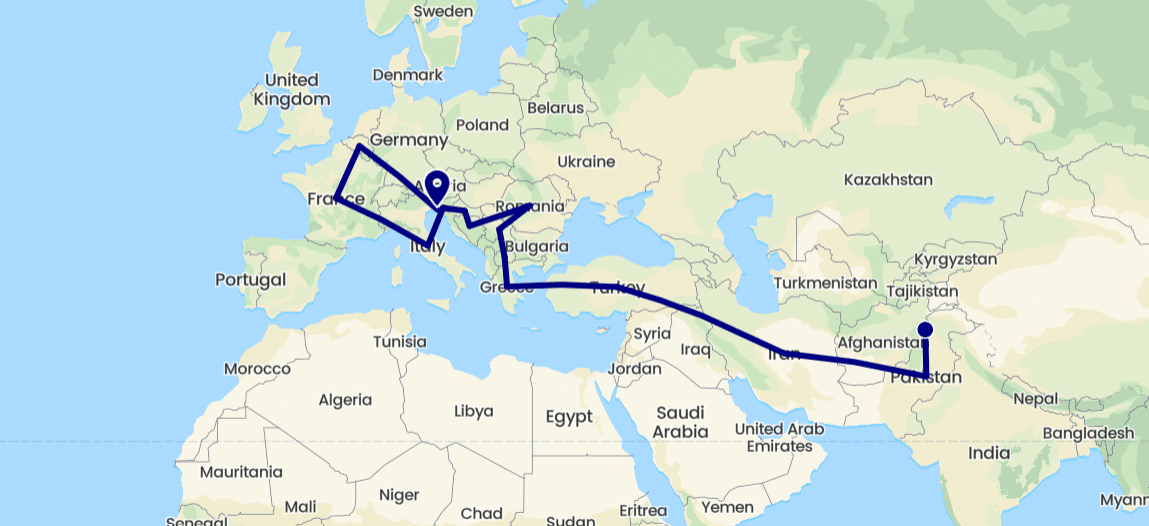
The respondent’s route from Kunar, Afghanistan, to Trieste, Italy

overview
from Afghanistan,
aged 12.